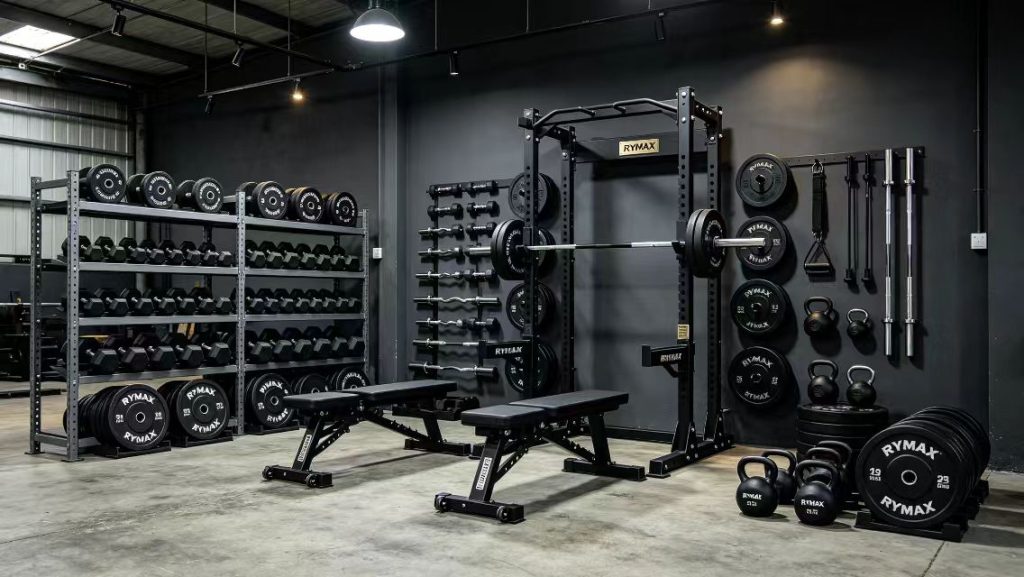
Setting up a commercial gym is a large capital project, and most of the expensive mistakes happen before a single machine is ordered — in the planning stage. This checklist walks through the full process, from defining who you are building for, to specifying the free-weight package that will do most of the daily work.
Use it as a working document when you brief a supplier, plan a floor layout, or budget an expansion.
Step 1 — Define Who You Are Building For
Every equipment decision follows from the training profile of your members. Before anything else, answer:
- Primary training style: strength training, functional training, group classes, or a mix?
- Member volume at peak hours: how many people train at once, and on what?
- Level mix: beginners need guidance and safer stations; advanced lifters need heavy free weights.
- Growth plan: will the floor expand in 2–3 years? Buy racks and platforms that can scale.
A strength-focused commercial gym and a functional studio need very different equipment packages. Deciding this first prevents buying equipment that sits unused.
Step 2 — Plan the Floor Layout by Zone
A commercial floor usually divides into zones. Each zone has its own equipment logic:
| Zone | Typical equipment |
|---|---|
| Free weight area | Racks, benches, barbells, dumbbells, weight plates |
| Functional / turf area | Kettlebells, battle ropes, medicine balls, plyo boxes |
| Cardio area | Treadmills, bikes, rowers, ellipticals |
| Group class studio | Mats, small dumbbells, steps, storage |
| Stretch / recovery | Mats, foam rollers, mobility tools |
Plan circulation first: walkways, mirror clearance, and safe lifting space around racks and platforms. A floor that “fits” on paper but has no safe lifting space will be a daily problem.
Step 3 — The Free Weight Checklist
Free weights are usually the highest-usage equipment in a strength gym. Work through this list:
Dumbbells
- Choose the covering based on usage: urethane vs rubber comparison covers durability, odor and floor protection.
- Decide the weight range and the increments that suit your members (see our dumbbell weight chart).
- Plan storage: a rack system that matches the number of sets you buy.
Weight plates and barbells
- Bumper plates for Olympic lifting and dropping; calibrated or rubber-coated plates for general strength work.
- Match bar type to the training — see Olympic vs standard barbell.
- Plate storage trees or wall racks keep the floor safe and tidy.
Racks and benches
- Decide squat rack vs power rack using our rack comparison guide.
- Count benches by press stations: flat benches for heavy pressing, adjustable benches for incline and shoulder work (flat vs adjustable bench).
- Add spotting safety: safety pins, spotter arms, or full cages.
Step 4 — Estimate Quantities, Not Just Types
Quantity planning is where most new gyms get the mix wrong. A practical starting point:
- Count peak-hour users per zone, then buy for roughly 70–80% of that number to avoid over-buying.
- Buy more small increments in dumbbells and plates — they wear out and are used constantly.
- Buy fewer, better racks rather than more cheap ones; a rack is a long-life asset.
- Reserve 10–15% of budget for accessories and storage, which are always forgotten.
Step 5 — Budget and Procurement
Budget by zone, not by item. A commercial gym budget typically covers:
- Free weights and racks — the core of a strength floor.
- Cardio and machines — usually the biggest single line item.
- Flooring and mirrors — often underestimated; rubber flooring is essential under free weights.
- Shipping, duties and installation — see our guide on importing gym equipment from China.
Step 6 — Choose Suppliers Carefully
Equipment quality varies enormously. When evaluating suppliers:
- Ask for the actual steel thickness and covering type, not marketing names.
- Request samples or reference sites using the equipment commercially.
- Confirm spare parts and after-sales support before ordering in volume.
- Check how easily product lines can be mixed across suppliers for the same floor.
- Read how to evaluate dumbbell manufacturers in China for a supplier checklist.
Frequently Asked Questions
What equipment should a new commercial gym buy first?
Start with the free-weight core: racks, benches, barbells, dumbbells and weight plates. These are used daily and shape the training experience more than any other purchase.
How much space do I need per person?
Plan generous clearance around racks and platforms first — free-weight areas need more space per person than cardio areas, because of bar length and safe lifting zones.
How many dumbbell sets do I need?
Base it on peak-hour demand. Most strength floors need multiple sets in the most-used mid-range weights and fewer at the extreme ends.
Should I buy a mix of equipment brands?
A mix is normal, and often sensible: buy the highest-impact items from the strongest suppliers, and keep floor accessories consistent.
Related Products & Guides
Building your equipment list? These pages may help:
- Urethane CPU Dumbbells (RM1019)
- Custom Rubber Weight Plate & Barbell Set
- Commercial Grade Heavy-Duty Half Power Rack
- Flat Gym Bench — Custom Logo Utility Bench
- Cast Iron Kettlebells for Commercial Gyms
- Browse strength training equipment
- Squat Rack vs Power Rack: Which One Does Your Gym Need?
- Flat vs Adjustable Bench: Choosing the Right Gym Bench
- How to Choose the Right Weight Plates for Your Gym
- Best Dumbbell Manufacturers in China: A Buyer’s Guide
Planning a new floor or an expansion? Send us your equipment list and our team will help you specify it.
Related resources
Planning a facility? These pages go deeper on the equipment decisions:
- Wholesale dumbbells — urethane, rubber, vinyl and adjustable ranges
- Wholesale barbells — Olympic, squat, hex and specialty bars
- Weight plates and bumper plates — rubber, urethane and calibrated steel
- Benches and racks — commercial benches, squat racks and storage
- Dumbbell buying FAQ — 20 questions buyers ask before ordering
- How to import gym equipment from China — shipping, duties and documentation
Need a quotation for a specific project? Send us your equipment list and we will come back with specifications, pricing and a loading plan.